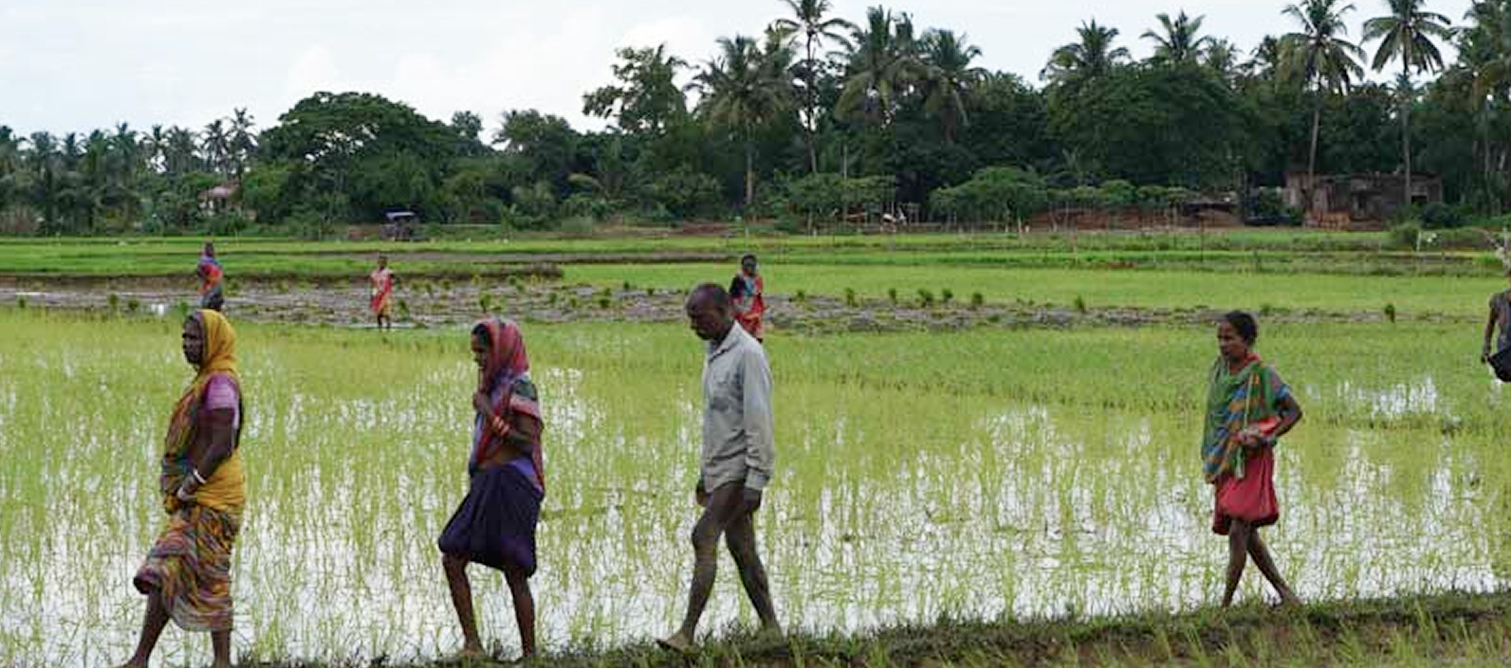


In Tamil Nadu’s Dindigul district, social protection is not a distant government promise, it’s a lived reality shaped daily by women, families, and community organisations like PEACE Trust, a valued member of Community Action Collab (CAC).
For decades, PEACE Trust has walked alongside vulnerable communities, ensuring that people not only know their rights but also have the means to claim them. Their work shows that when systems are made human, through trust, access, and information, transformation begins.
Empowerment through Information and Access
PEACE Trust believes that empowerment starts with awareness. In many of the villages they serve, people are unaware of the schemes they are eligible for widow pensions, livelihood loans, health insurance, or rural employment guarantees. Through community champions and women’s self-help groups, PEACE Trust bridges this gap by conducting awareness sessions, supporting applications, and advocating with local authorities.
This simple yet powerful act of handholding has led to real change. In 2024-25 alone, PEACE Trust helped 8765 of families apply for entitlements, access livelihood loans, and receive financial assistance, improving both their income and resilience.
Women Leading Change in Their Own Lives
Across Devanayakkanpatti, Viralipatti, and East Mathinipatty, women’s stories reflect the same resolute determination of individuals empowered by opportunity.
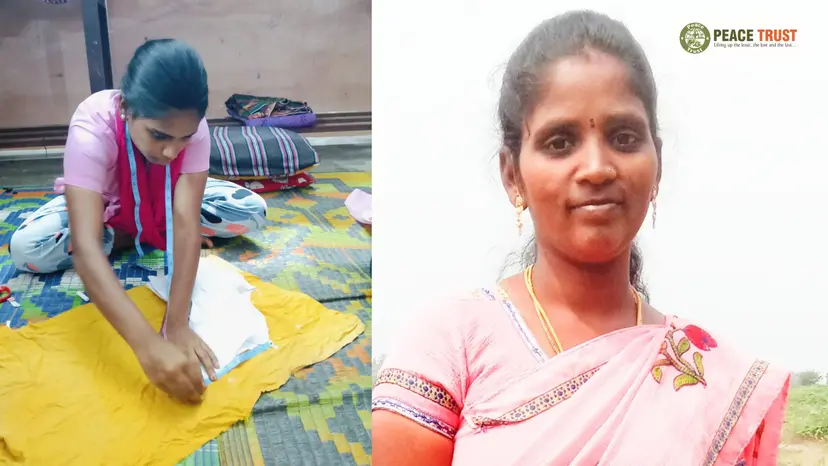
Saranya, a young woman from Viralipatti who lost her father and faced financial uncertainty. With vocational training facilitated by PEACE Trust and local volunteers, she acquired new skills, found employment, and became financially independent. Her journey is proof that the right skills can unlock dignity and confidence for young women.
Then there’s Rajeswari, a widow in East Mathinipatty who struggled to navigate official systems to obtain her widow certificate, a key to social safety net benefits. With the help of a PEACE Trust community champion, she completed the process successfully and now receives financial and healthcare support. Her story is a reminder that access is empowerment when communities have someone to guide them through complex systems.
Across these stories, PEACE Trust has gained deep learning from the ground. The organisation has seen, time and again, that government schemes reach people faster when community facilitators act as intermediaries. Women’s self-help groups become powerful spaces for collective problem-solving and information-sharing. Small livelihood opportunities reduce vulnerability, while local champions multiply impact through peer-to-peer support. Each success reaffirms a simple truth: policies work best when people are supported to use them.
PEACE Trust’s experience highlights why local organisations are indispensable in India’s social protection landscape. They speak the language of the community, understand local realities, and remain present long after a project ends. They transform what might otherwise be a transactional relationship into one built on trust, empathy, and shared purpose.
By standing with communities, PEACE Trust has built more than programmes, it has nurtured pathways of resilience that are self-driven, sustainable, and deeply rooted in dignity. In doing so, it reminds us that meaningful change doesn’t come from delivering services alone, but from enabling people to access them with knowledge, confidence, and hope.
In doing so, PEACE Trust demonstrates a fundamental truth: meaningful change doesn’t come from delivering services alone, but from enabling people to access them. As a team member from PEACE Trust puts it: “Empowerment is not about delivering benefits; it’s about ensuring people can access them themselves.”